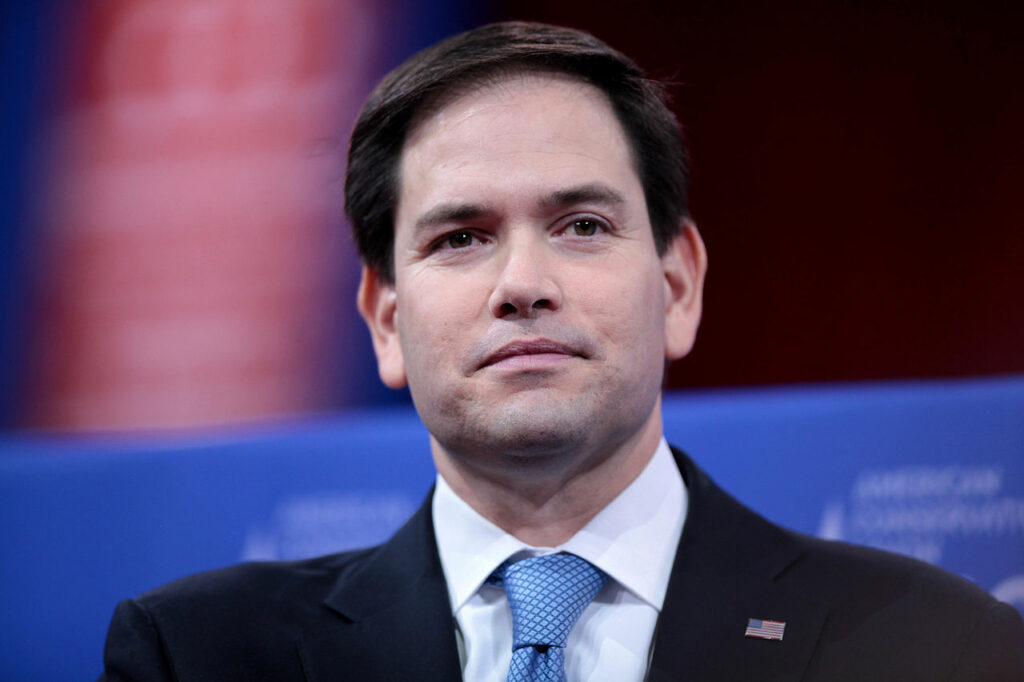
(Scypre.com) – U.S. Secretary of State Marco Rubio delivered a scathing denunciation of Venezuelan President Nicolás Maduro on Sunday, labeling him a “narco-terrorist” and accusing his regime of posing a direct threat to U.S. national security. In a post shared on X (formerly Twitter), Rubio alleged that Maduro is not merely a corrupt politician but the active leader of the Cartel de Los Soles, a powerful Venezuelan drug-trafficking network long suspected of ties to the military and senior government officials.
Rubio’s remarks came on the one-year anniversary of Venezuela’s 2024 presidential election, which the U.S. and its allies deemed fraudulent. Maduro’s controversial victory secured him a third term in office, further isolating Caracas diplomatically. Rubio has been one of the most vocal U.S. figures calling for regime change in Venezuela, and Sunday’s statement marked an escalation in rhetoric, equating Maduro’s actions with those of designated terrorist organizations.
The senator’s accusations are backed by longstanding federal indictments, including a 2020 U.S. Department of Justice charge that named Maduro and other Venezuelan officials in a narco-terrorism conspiracy involving the smuggling of hundreds of tons of cocaine into the U.S. through Central America. In his latest comments, Rubio alleged that Maduro’s government maintains close operational ties with violent groups such as the Tren de Aragua—a Venezuela-based criminal organization recently designated by the U.S. as a transnational criminal threat—and Mexico’s Sinaloa Cartel. The Treasury Department echoed Rubio’s assessment last week, stating that the Venezuelan state under Maduro “facilitates narcotics operations and undermines regional stability.”
Despite the harsh language, the Trump administration’s broader policy toward Venezuela has sparked mixed reactions. Just days before Rubio’s comments, the administration reauthorized Chevron’s license to operate in Venezuela, citing U.S. energy security and negotiation leverage on immigration as justification. Critics, including some within Rubio’s own party, view the move as undercutting the administration’s moral clarity. In response, Rubio clarified that economic cooperation with Venezuela does not amount to recognition of Maduro’s presidency, and insisted that “no partnership should be mistaken for approval of a narco-dictatorship.”
International observers and analysts remain divided on the implications of branding Maduro as a narco-terrorist. Some believe it signals a more aggressive posture that may lead to expanded sanctions and international pressure. Others worry it could backfire, giving Maduro fodder to claim victimhood and rally nationalist support. Adding fuel to the issue, former Venezuelan intelligence chief Hugo Carvajal recently pleaded guilty in a U.S. court to drug trafficking charges, a development Rubio cited as further evidence of criminal activity at the highest levels of the Maduro regime.
The Venezuelan government responded swiftly, with Foreign Minister Yván Gil dismissing the allegations as “imperialist fabrications” and denying the existence of groups like Tren de Aragua. Meanwhile, regional organizations such as the Organization of American States have voiced concern over human rights violations in Venezuela and have urged continued diplomatic isolation of Maduro’s government.
As the U.S. weighs its next steps, Rubio’s fiery stance reinforces his long-standing position that Venezuela’s crisis is not simply a humanitarian or political issue—but a national security threat involving organized crime at the state level. With both strategic oil deals and aggressive sanctions playing out in parallel, the Biden–Trump policy divide on Venezuela remains blurred, and the country continues to serve as a geopolitical and moral fault line heading into 2026.